
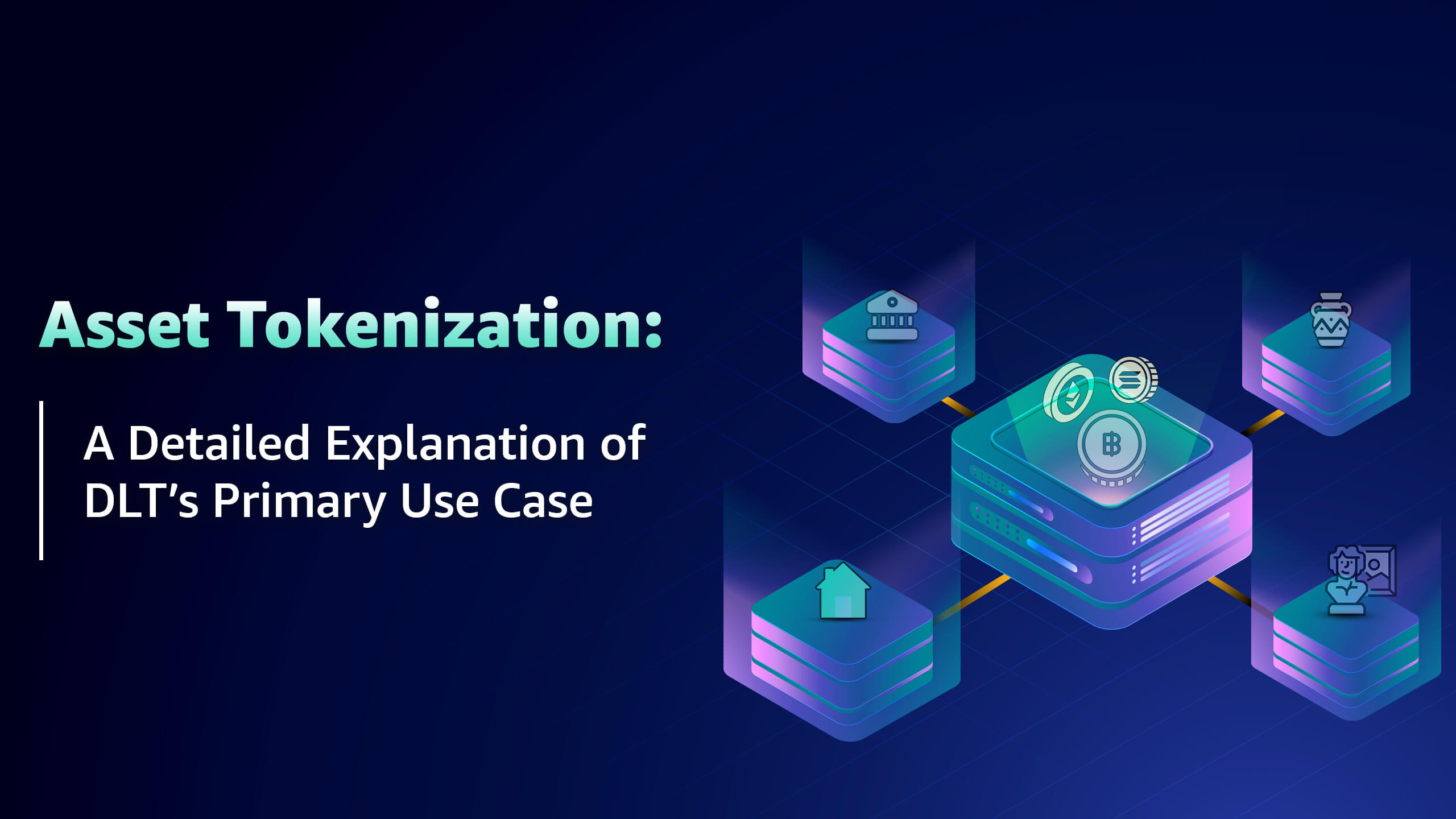
With the latest advent in the DeFi ecosystem, investors have begun utilizing blockchain technology for more than just trading cryptocurrencies. Rather, Distributed Ledger Technology (DLT) is now utilized for storing confidential information, trading fiat and crypto tokens, and even developing and deploying different types of DeFi applications on the blockchain. Recently, however, DLT has been used for a much-advanced purpose, known as asset tokenization. It is the process through which an investor or owner purchases tokens against a real-world or digital asset, ensuring immutable ownership and end-to-end encryption. Since asset tokenization has become a much-demand service in the DeFi ecosystem, it’s time investors and asset owners learn more about this process in-depth. With this being said, we have compiled a detailed and comprehensive guide, explaining the process of tokenizing different assets, types of tokenized assets, benefits and challenges of asset tokenization, and several use cases. It will help you understand the ins and outs of asset tokenization and the advanced usage of distributed ledger technology like the blockchain.
What is Asset Tokenization?
In textbook terms, asset tokenization can be considered as the process of issuing or creating crypto tokens on a concerned blockchain ledger that represents either a digital or a real-world asset. Asset owners can utilize the tokens to raise funds without actually selling or mortgaging the asset in real-time. On the contrary, investors can gain a fraction of asset ownership by purchasing the tokens in the DeFi ecosystem. Once the investor purchases the tokens that represent any asset, the ownership gets transferred and the details of the transaction get stored in the blockchain ledger. Owing to this, the ownership becomes immutable, meaning that once added to the ledger, no one can ever change the information or manipulate the ownership terms and conditions. To understand this advanced utilization of a distributed ledger technology like the blockchain, let’s consider a real-life example. Let’s say you own a real estate property worth $100,000. If you want to raise money of $10,000, you can easily leverage blockchain technology rather than selling the property or putting it on a mortgage for a loan. It can be done by creating and issuing tokens worth $100,000 against the real estate property. Each token will represent 0.0002% of the property, thereby allowing investors to gain a significant share of the real estate asset. The ownership details are immutable once the ledger gets written with the transaction. This way, investors will have a certain percentage of shares in your property land and you can raise the required amount of $10,000.
How is The Asset Tokenization Process Conducted?
Creating tokens that represent a real-world or digital asset is quite a lengthy process and requires the intervention of crypto developers. Even if you are not tech-savvy, knowing the process of asset tokenization will help you in the long run. Below, we have listed the steps involved with creating or issuing new crypto tokens against any asset on the distributed ledger technology.
1. Creation of Digital Tokens
The first step is to create crypto tokens and release the same on the concerned blockchain using the latest technologies. It should be ensured the tokens created or issued represent the real-world or digital asset properly. Usually, to do so, the concerned asset is broken down into smaller fragments, allowing developers to create tokens that could represent a minor fraction of the asset.
2. Implementation of Smart Contracts
Smart contracts play a significant role in which the tokenized assets behave in the decentralized ecosystem. They act as a governance mechanism, ensuring easy issuance of the tokens to the investors, better balance tracking, and dividing the payouts of the benefits earned on the asset amongst the investors in accurate proportion. Since smart contracts are self-executable, no manual intervention is needed in the transaction. Once the smart contracts execute themselves, the concerned details are added to the blockchain ledger, thereby creating immutable ownership for the investors.
3. Distribution and Sales of Tokens
After the crypto tokens are created and the smart contracts are deployed on the concerned blockchain, the asset owner sells all the tokens to the investors. It can be done through a private sale campaign, an open or public sale platform, or a whitelist model that combines the goodness of both private and public sale campaigns. Since the asset is fractionalized, the liquidity factor is increased by rapid folds, ensuring better ROIs.
4. Management and Governance of The Digital Tokens
The governance of the digital tokens is enabled using smart contracts. These define the fraction of control over the asset for every investor, their shares in the returns or profits earned through the asset, and other such necessary details. Also, management and distribution of asset ownership can be done through the conditions and rules pre-encrypted in the smart contracts.
5. Secondary Market Trading
Thanks to secondary market trading, owners can easily increase the liquidity of the asset by selling the tokens on another market than where they were first created and issued.
What Entities Can Be Tokenized Through DLT?
Before you embark on the journey of asset tokenization, it is important to know what types of entities can be tokenized. Below, we have listed the major asset types that can be tokenized using the distributed ledger technology.
- Real estate properties
- Equities and company shares
- Investment funds
- Non-tangible services or products
- Digital arts and paintings
What Are The Benefits of Asset Tokenization?
Both investors and owners can benefit from asset tokenization, which is why we have segregated the profits below for better understanding.
Advantages of Asset Tokenization For Investors
1. Shorter lock-up time: One of the major disadvantages of investing in illiquid assets is the longer lock-up period during which investors won’t be able to sell the tokens they once purchased. However, asset tokens are accessible through the secondary markets, thereby allowing investors to sell them easily and gain higher liquidity without having to wait for months or years to enjoy the profits in terms of revenues. 2. Secured identity: The entire ownership details and the concerned decentralized identifiers are directly stored on the blockchain ledger. As a result, the investor’s private/public key pair becomes a digital signature, necessary for identity authentication, transaction execution, and token management or governance. Also, the encryption of the digital signature allows investors to trade or sell the tokens using anonymous identities, which enhances the overall security of the transaction. 3. Transparent process: One of the major benefits of asset tokenization is the immutability of ownership details and asset histories. In other words, once these details are added to the decentralized ledger technology, they cannot be manipulated or changed. Investors will have easy access to the asset’s history, holdings, and other important information necessary to make the right investment call. Additionally, thanks to the end-to-end encryption and immutability features of the concerned blockchain technology, they won’t have to be afraid of losing ownership of the asset. 4. Increased access: If you have to invest in a real estate property or purchase company shares, the amount required for the upfront investment would be quite high. It is not always feasible to deploy such a significant amount of funds in one go, thereby rendering the asset inaccessible or illiquid. However, when assets are tokenized, every token represents a certain fraction of ownership and won’t cost much. This allows investors to gain ownership of the asset without using a significant investment volume.
Advantages of Asset Tokenization For Owners
1. Reduced asset management costs: When you attempt to transfer the asset ownership following the traditional methods, a significant expense will be incurred for handling third-party tasks like broker fees, paperwork, and many more. It not only delays the transaction but also compels you to spend quite a lot unnecessarily. On the other hand, when you transfer the asset ownership to the investors through the crypto tokens, no such additional expense will be incurred. A small amount of transaction fee will be charged according to the rules of the exchange platform in the DeFi ecosystem. However, it is extremely nominal. On top of this, the absence of any centralized verification authority speeds up the transfer of ownership. 2. Increased asset liquidity: One of the major benefits owners can enjoy with asset tokenization is higher liquidity for the concerned real-world or digital asset. After crypto tokens are created and issued with the same valuation as that of the asset, owners can easily raise a significant amount of funds on the blockchain by selling these tokens to investors. 3. Fairer pricing models: Most often, owners leverage the stable coins to create the crypto tokens against an asset. These ensure a fairer price for an illiquid asset and prevent additional payments, like illiquidity discounts to the investors.
What Are The Risk Factors of Asset Tokenization?
While asset tokenization might seem to be the best solution to raise funds against an illiquid asset or gain ownership of an asset with an immutable contract, there are certain challenges both owners and investors should be aware of.
- The lack of regulatory and governing principles prevents the widespread adoption of this practice.
- Due to the absence of technological advancements, consistency between the off-chain assets and on-chain tokens can’t be maintained end-to-end.
- Building and deploying any specific blockchain for asset tokenization will require a huge upfront investment and a full-scale operating infrastructure.
Conclusion
Thanks to the advancements and modernization of the decentralized finance ecosystem, asset tokenization has become the best way in which off-chain assets can be secured and managed with ease. The fractional ownership allows investors to gain control over different assets without worrying about reduced liquidity or higher lock-in periods. On the other hand, owners can enjoy reduced management costs and the time taken to transfer ownership. Besides, the immutability and end-to-end encryption feature of distributed ledger technologies like the blockchain offer excellent security to investors for their ownership details.