
Over the years, the digital ecosystem has witnessed numerous revolutionary processes and adoptions. However, what truly sets the bar high enough is the amalgamation of smart contracts in the core business operations. Intending to automate and streamline payments, transactions, and other finance-related operations, these contracts serve as the backbone for a decentralized ecosystem. Although smart contracts have revolutionized the picture, you should implement a proper system to harness their true potential and embark on a transformational journey. This is where a smart contract development company comes into the picture. It will not only develop the contracts for your business but also streamline several other operations. However, not many businesses are aware of the potential of a smart contract, let alone acknowledge the benefits of collaborating with a credible development partner. That being said, we have crafted a detailed guide, explaining how a smart contract development firm can provide a competitive edge to your business.
Understanding the Core Functionality of Smart Contracts
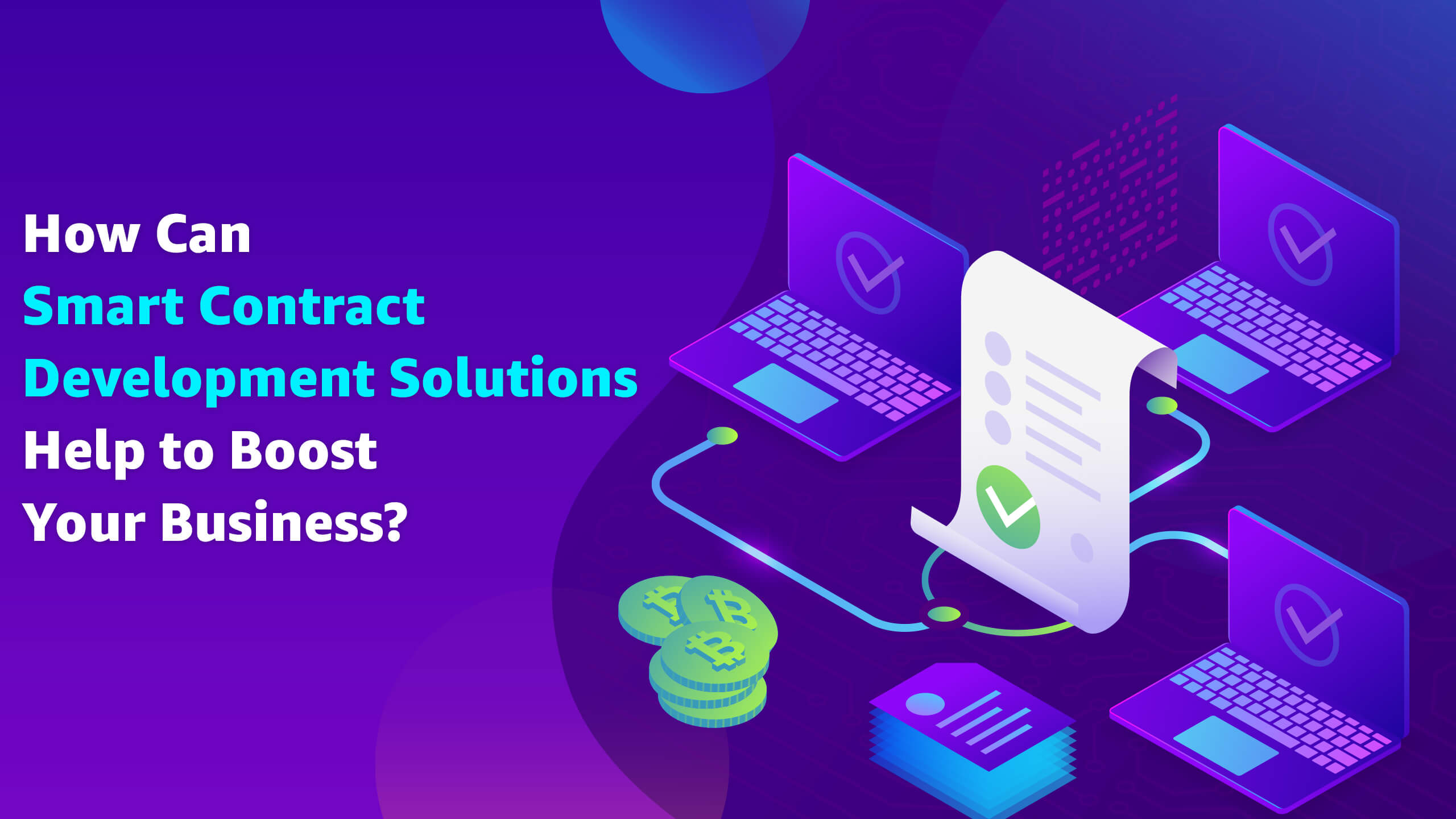
Smart contracts are computerized programs that execute automatically and complete a set of pre-defined tasks based on the conditions that need to be met. No manual operation or monitoring is needed, which is why they triumph over traditional contracts. For example, you can define the conditions for releasing a payment to your vendors in the smart contract. Once they are met, the contract will automatically execute the codes and release the payments. They operate on the blockchain, which is why implementing transparency, security, and immutability becomes easier. Every smart contract must have three major components, each serving a dedicated purpose. These are:
- Code block: It defines the logic of the contracts and the actions that need to be performed following the conditions.
- Data: This block contains relevant information about the states and other details, like vendor information, party details, account details, and many more.
- Rules: Every smart contract should have a specific set of rules governing its operations and defining transparency between the involved parties.
Real-World Applications of Smart Contracts
Before hiring a smart contract development company, having a clear idea about its applications in the real world is imperative. This way you can easily decide if these contracts will yield prospective results for your business or not. Below we have listed a few ways in which smart contracts play a significant role in different industries.
Supply Chain Management
Smart contracts enable end-to-end traceability and visibility of the supply chain systems, allowing businesses to process orders, release payments, and even control inventories with ease. Since these operations are automated, it becomes easier for the users to control and manage the workflows without any human intervention.
Real Estate
Since property transfers, sales, and rentals involve too many intermediate bodies and governance rules, it is better to switch to smart contracts. It will not only eliminate the involvement of so many third parties in between but also streamline the tasks. Furthermore, the contracts run on the blockchain ledger, ensuring the details are immutable and no party can manipulate the details. They will also reduce processing time and make the workflows more efficient.
Finance Services
Smart contracts have a huge role to play in the finance sector. They enable financial institutions and corporations to automate different processes, like claim settlements, payment processing, transaction verification, and asset management. Since they are encrypted from end to end, the related information sets can’t be manipulated. Plus, they also eliminate the restrictions otherwise imposed by the rules and regulations of governing authorities. In fact, making borderless payments and cross-border transactions is easier with smart contracts.
Legal and Governance
Another industry in which smart contracts have huge contributions is the legal and governance sector. From escrow agreements to property deeds, intellectual property management, and corporate deeds, several tasks can be automated and streamlined using these online contracts. Besides, they help maintain an optimal level of security by implementing high-end encryption layers and multiple authentication systems.
Healthcare
Lastly, smart contracts have also contributed a lot to the healthcare sector, allowing firms and hospitals to store patient information, health records, and other datasets on the public ledger. Additionally, the blockchain-enabled contracts ensure to protect the sensitive information from any cyber threat, thereby providing optimal security and privacy. In fact, these are also beneficial in streamlining payment processes between different parties involved in the healthcare industry.
Benefits of Hiring a Smart Contract Development Partner
Now that we have explained the real-world implementations of smart contracts, it’s evident how they can revolutionize different business processes. Having said that, below we have illustrated a couple of ways in which a smart contract development company will add more value to your business and revolutionize the operations.
Process Automation
Most business processes are conceptualized in a manner that human control and monitoring is evident. Due to the sheer lack of automated principles, the overall efficiency and performance metrics are impacted severely. Owing to this, hiring a smart contract development agency is imperative in today’s time. The experts can design and deploy different smart contracts to control the process flow and execution logic of different business operations. Since these contracts execute themselves automatically, you won’t need a human resource to trigger the beginning of the operation or control its process flow.
Increased Efficiency
A smart contract development agency will also help in increasing the process efficiency by streamlining the entire workflow and automating the operations. For example, a smart contract can initiate and complete the payments to vendors or property transfers automatically, thereby reducing the time involved. As a result, the operations can have higher efficiency and reduced productivity leaks. It will also improve the performance metrics, bringing more value to your overall business.
Reduced Operational Expenses
Another significant benefit of collaborating with a smart contract development company is a significant reduction in operational expenses. With process automation and implementation of self-executable contracts, business operations can be completed with ease. Furthermore, the costs involved with recruiting and managing human resources for overseeing and managing these operations can be eliminated from your budget plan.
End-to-End Visibility and Transparency
Thanks to the implementation of smart contracts, you will gain optimal transparency and visibility of the entire operation, whether it's order confirmation or payment processing. Since these are based on blockchain technology, the encrypted contracts will be added to a public ledger accessible by all the users. It will help you maintain a proper audit trail, track the progress of the concerned operation, and ensure the details remain immutable till the very end.
Enhanced Security and Transparency
One of the major advantages of hiring a smart contract development company is the ability to secure the contracts and prevent them from being hacked or exposed to other types of cyber threats. Several encryption strategies and authentication layers are integrated with the smart contracts, ensuring they are well-protected. Furthermore, with decentralized access to different users, it will become easier to maintain data privacy and security of confidential process information. 
Conclusion
In this article, we have explained the several benefits of hiring a smart contract development company to enhance your business’s operational efficiency and performance. So, based on these illustrations, you need to collaborate with the best agency that can add more value to your business and foster innovation and agility.