

10 Best Metaverse Crypto Projects To Watch Out For in 2023
Everyone has very little or no knowledge about the Metaverse. What does it mean and how does it work? We might not...

Build connected logistics platforms that bring transportation, warehousing, inventory, fleet operations and shipment visibility into one operational environment.
Web30 India helps logistics providers, freight companies, warehouse operators, distributors and supply chain businesses modernize the systems behind everyday movement of goods.








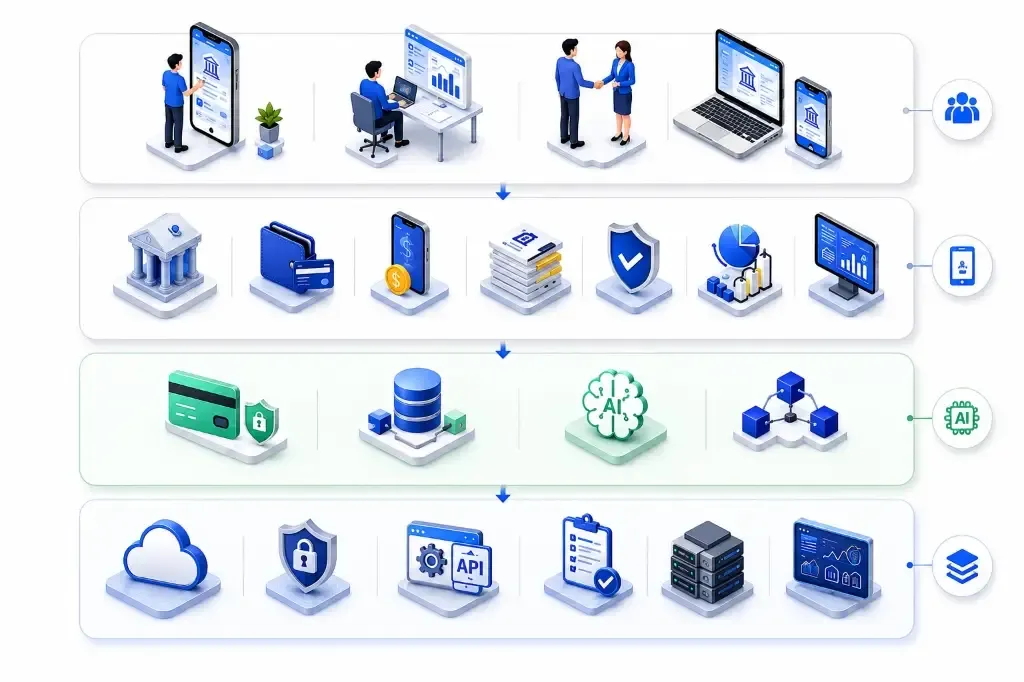
Logistics operations rarely run through a single system. Orders may begin in an ERP or commerce platform, inventory may sit inside a warehouse management system, transportation may be managed separately, while carriers, drivers, customers and suppliers interact through their own systems.
The challenge is not simply digitizing individual processes. It is creating a connected operational layer where shipment events, inventory, fleet data, delivery status and business information can move between systems without creating additional manual work.
We build logistics technology around that connected model. Solutions can combine transportation management, warehouse operations, real-time tracking, route optimization, analytics, automation and blockchain-based traceability where the business case requires it.
Real-time tracking and connected sensor data can provide visibility into shipment location and condition, while digital logistics platforms can combine operational data for planning, monitoring and decision-making.
Disconnected systems and delayed updates make it difficult to maintain a reliable view of shipments across the logistics network.
Multiple routes, carriers, vehicles, delivery windows and changing conditions create constant planning and execution challenges.
Inventory accuracy, warehouse movement, order fulfillment and transportation need to stay synchronized as demand changes.
Documentation, status updates, dispatch coordination and exception handling can create unnecessary administrative effort.
Shippers, carriers, warehouses, suppliers and customers often operate across different applications and data environments.
Traffic, delays, capacity changes, damaged goods and unexpected events can quickly affect downstream operations.
Build systems for shipment planning, carrier management, dispatch, route planning, delivery tracking and transportation operations.
Digitize receiving, put-away, inventory, picking, packing, dispatch and warehouse activity through connected workflows.
Monitor vehicles, drivers, routes, maintenance schedules, utilization and fleet performance through centralized platforms.
Connect GPS, telematics, IoT and logistics events to provide real-time or near-real-time visibility across shipments.
Bring operational data into centralized dashboards for monitoring shipments, fleet activity, inventory and exceptions.
Apply AI and machine learning to areas such as demand forecasting, ETA prediction, route optimization, document processing and anomaly detection.
Use blockchain where shared records, traceability, asset history or multi-party verification require a trusted transaction layer.
Capture customer orders, shipment requirements, delivery locations and expected demand.
Identify available inventory and determine where goods should be allocated for fulfillment.
Manage receiving, storage, picking, packing and dispatch activities.
Assign carriers and vehicles, plan routes and coordinate transportation requirements.
Track shipments, vehicles and relevant events while goods move through the logistics network.
Manage delivery execution, proof of delivery, exceptions and customer updates.
Use operational data to understand performance, identify bottlenecks and improve future planning.
Healthcare organizations need technology that fits their specific operating model. We build digital solutions across patient care, clinical operations, data management and healthcare administration.

Manage transportation planning, carrier operations, dispatch, routing, shipment execution and delivery workflows.
Digitize warehouse processes, inventory movement, order fulfillment, picking, packing and dispatch.
Manage vehicle information, driver operations, routes, maintenance, fuel data and fleet performance.
Connect GPS, telematics and IoT data to monitor shipment location, movement and condition.
Create a centralized operational view across shipments, inventory, transportation, warehouses and exceptions.
Coordinate delivery assignments, route planning, driver workflows, customer communication and proof of delivery.
Create connected records across suppliers, logistics providers, warehouses and customers for greater visibility and traceability.




Logistics platforms connect operational systems, vehicles, warehouses, employees, partners and customers. Security therefore needs to extend beyond the application itself.
User authentication, role-based access and permissions for employees, drivers, partners and administrators.
Secure application workflows, session management, authorization and protection of operational functionality.
Secure communication between logistics platforms, ERP systems, carriers, warehouse systems, IoT platforms and external services.
Protection of shipment, customer, inventory, fleet and business data through controlled storage and access.
Secure cloud, network, server, database and deployment infrastructure supporting logistics applications.
Logging, alerts, audit trails and operational monitoring to identify unusual activity and support incident investigation.
Control access across internal users, partners, drivers and administrators.
Protect shipment, customer, inventory and business information throughout the platform.
Secure integrations with carriers, ERP, WMS, TMS, payment and external logistics systems.
Apply appropriate controls around connected trackers, sensors, telematics and edge devices.
Maintain records of important operational and administrative activities.
Design workflows around applicable transportation, customs, data protection and industry-specific requirements.
Connect orders, customers, inventory, finance and business operations.
Synchronize inventory, warehouse movements, picking, packing and dispatch events.
Connect carriers, freight systems, shipment status, delivery information and transportation workflows.
Bring vehicle location, sensor information, temperature, condition and other connected-device data into operational systems.
Connect online orders, fulfillment workflows, delivery status and customer-facing information.
Integrate billing, freight payments, settlements, invoicing and financial workflows.
Provide APIs and interfaces for suppliers, carriers, customers and other logistics partners.
Explore high-impact decentralized applications and custom blockchain architectures deployed for global startups and Fortune 500 enterprises.
Digitize freight planning, carrier coordination, shipment tracking and transportation execution.
Connect warehouse operations with inventory, orders, fulfillment and outbound transportation.
Coordinate drivers, routes, delivery status, customer communication and proof of delivery.
Monitor temperature-sensitive shipments through connected sensors and real-time condition data.
Manage vehicles, drivers, maintenance, routes, utilization and operational performance.
Connect orders, inventory, warehouses and delivery operations to support faster and more predictable fulfillment.
Coordinate documentation, shipment events, customs-related workflows, partners and international transportation processes.
Analyze historical and operational data to support inventory and demand planning.
Evaluate routes, delivery locations, vehicle constraints and operational conditions to support more efficient planning.
Use available shipment, route and historical information to improve estimated arrival calculations.
Analyze vehicle and equipment information to identify maintenance requirements before failures disrupt operations.
Automate extraction and validation of information from logistics documents such as invoices, shipping documents and delivery records.
Identify unusual shipment events, delays, operational anomalies and other conditions that require attention.
Combine data from multiple operational systems into a centralized view for monitoring and decision-making.
Create structured, traceable records of important supply chain events where multiple parties need shared visibility. AI-powered route optimization, predictive analytics and IoT-based monitoring are already established areas of logistics digitization, while newer logistics platforms are combining these capabilities into more connected operational decision systems.
Explore practical insights on logistics technology, supply chain digitization, warehouse systems, fleet management, IoT, AI, blockchain and operational automation.
Everyone has very little or no knowledge about the Metaverse. What does it mean and how does it work? We might not...
Today, smart contracts are beneficial for companies. This in-depth guide goes into great detail about their unique...
Everyone must be aware of how important it is to have a website in order to make a mark in the IT business industry...
Welcome to the next gaming frontier, where virtual worlds collide with reality to create immersive experiences like...
DeFi is an innovative system that will fundamentally change global finance. In summary, DeFi is an open monetary sy...
Everyone has very little or no knowledge about the Metaverse. What does it mean and how does it work? We might not...
Today, smart contracts are beneficial for companies. This in-depth guide goes into great detail about their unique...
Everyone must be aware of how important it is to have a website in order to make a mark in the IT business industry...
Welcome to the next gaming frontier, where virtual worlds collide with reality to create immersive experiences like...
DeFi is an innovative system that will fundamentally change global finance. In summary, DeFi is an open monetary sy...
Everything you need to know about our enterprise blockchain engineering process, costs, security, and architectures.
Where connections are brewed, ideas percolate, and inspiration flows!
Let’s hear about your project. Drop us the details or send us a direct email
 24/7 Support