
10 Best Metaverse Crypto Projects To Watch Out For in 2023
Everyone has very little or no knowledge about the Metaverse. What does it mean and how does it work? We might not...

Build decentralized applications, digital assets, payment systems and enterprise blockchain solutions on Polygon's EVM-compatible infrastructure.
Web30 India develops Polygon-based applications using smart contracts, wallets, token infrastructure, DeFi components, digital assets, blockchain integrations and Polygon's broader ecosystem for scalable onchain products.

Polygon has evolved from an Ethereum scaling network into a broader ecosystem spanning Polygon PoS, zero-knowledge technology, custom chain infrastructure and cross-chain interoperability. AggLayer is designed to connect different chains, while Polygon CDK provides infrastructure for launching customized chains.


Polygon PoS provides an EVM-compatible environment for deploying Ethereum-compatible smart contracts with lower transaction costs and higher effective throughput than Ethereum mainnet. Developers can use familiar Ethereum tooling and deploy Solidity contracts with minimal changes.
But Polygon development is no longer limited to deploying contracts on Polygon PoS. The wider ecosystem includes AggLayer for cross-chain coordination and Polygon CDK for building customized ZK-powered chains. This gives projects different architectural options depending on their application, performance, privacy, interoperability and infrastructure requirements.
Web30 India works across this ecosystem to design and build Polygon-based products, from individual smart contracts and dApps to tokenization platforms, payment applications and customized blockchain infrastructure.
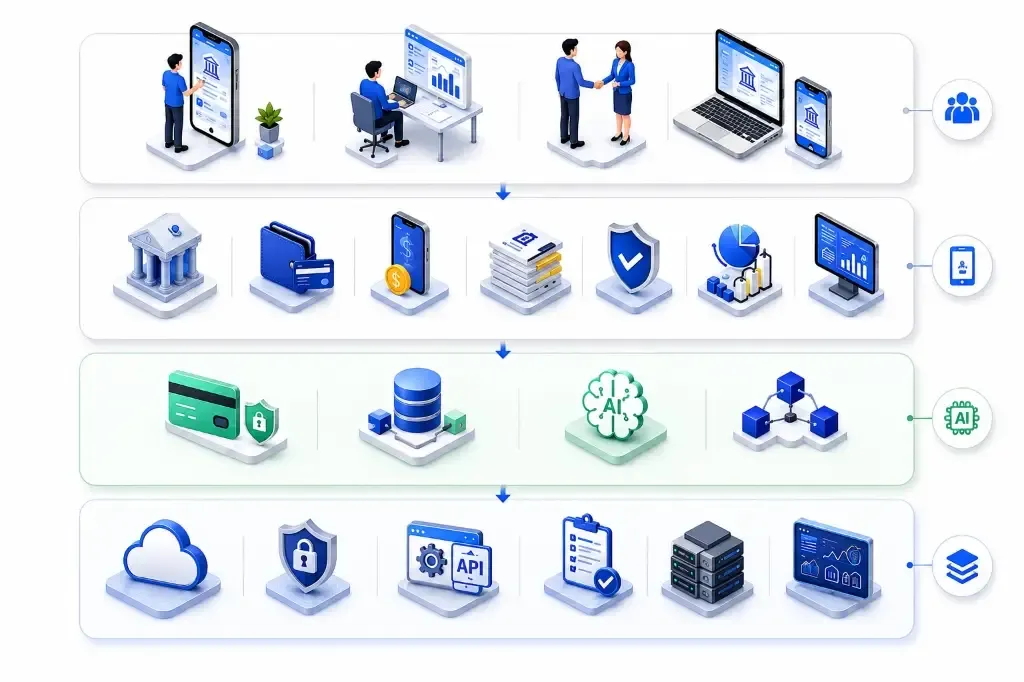
Build decentralized applications with Polygon smart contracts, Web3 interfaces, wallets, blockchain data and backend infrastructure.
Develop Solidity-based smart contracts for tokens, DeFi, NFTs, payments, marketplaces, governance and custom business logic.
Create and deploy fungible, NFT and other programmable digital assets with defined supply, permissions, utility and distribution mechanisms.
Build decentralized financial applications covering swaps, liquidity, staking, lending, payments and other programmable financial workflows.
Develop NFT contracts, collections, marketplaces, ownership systems, royalty mechanisms and digital asset applications.
Build blockchain-based payment and settlement applications using Polygon infrastructure and integrate wallets, stablecoins, payment rails and business systems.
Build applications that represent real-world assets onchain, with token issuance, ownership, transfer, compliance and supporting infrastructure.
Design customized blockchain networks using Polygon CDK where a project requires greater control over infrastructure, architecture or operating requirements.
Develop decentralized exchanges, staking platforms, liquidity applications, lending protocols and other financial applications.
Build marketplaces for digital art, collectibles, gaming assets, memberships, entertainment and branded digital assets.
Create infrastructure for tokenized real estate, financial assets, commodities, funds and other real-world assets.
Build payment and settlement applications around stablecoins, wallets, merchant payments and cross-border transactions.
Develop blockchain gaming infrastructure for digital assets, player ownership, marketplaces, rewards and game economies.
Build business applications that use Polygon infrastructure for digital assets, verification, settlement, loyalty and multi-party workflows.
Develop governance systems with proposals, voting, membership, treasury controls and onchain execution.
Use Polygon CDK to design specialized blockchain infrastructure where a standard public-chain deployment is not the right architecture.
Polygon PoS uses a layered architecture where transaction execution and validator consensus are separated between Bor and Heimdall-v2, with Ethereum serving as the root chain for staking contracts and periodic checkpoints.
Ethereum hosts Polygon's staking contracts and receives periodic checkpoints from the Polygon PoS network.
The consensus and validation layer manages validators, staking, block producer selection, milestones and checkpoints. Heimdall-v2 is built using Cosmos SDK and CometBFT components.
Bor is the block production and EVM execution layer. It executes transactions and produces Polygon PoS blocks using a rotating set of validators selected through the Heimdall layer.
Solidity-based smart contracts execute application logic on the EVM-compatible Polygon environment.
dApps, wallets, marketplaces, payment systems, tokenization platforms and other applications interact with the blockchain through RPCs, SDKs and Web3 infrastructure.
AggLayer extends Polygon's architecture toward cross-chain interoperability by supporting asset and message movement between connected chains.
Polygon PoS supports Ethereum-compatible smart contracts and established development tools, allowing teams to work with familiar Solidity and EVM workflows. Polygon's developer documentation supports tools including Hardhat, Foundry, Remix, Ethers.js and Web3.js.

Solidity, OpenZeppelin, Hardhat, Foundry, Remix

React, Next.js, Node.js, TypeScript, JavaScript

JSON-RPC, Ethers.js, Web3.js, WalletConnect

Blockchain explorers, indexers, event processing, APIs and application databases

Polygon RPC infrastructure, node providers, cloud infrastructure, containers and monitoring

Local development networks, Polygon Amoy testnet, automated contract testing and integration testing
Use secure Solidity patterns, access controls, input validation, reentrancy protection and appropriate testing and review processes.
Protect private keys, signing operations, wallet permissions and transaction authorization.
Validate transaction parameters, contract interactions, token movements and administrative operations.
Secure APIs, authentication, backend services, frontend interfaces and user sessions interacting with Polygon.
Protect RPC endpoints, nodes, databases, cloud environments, deployment systems and operational credentials.
Track blockchain events, application activity, contract interactions, administrative operations and abnormal transaction behavior.
Polygon's own security documentation describes the use of secure coding practices, static analysis, manual review, fuzzing and formal verification where applicable in its smart-contract security processes.
Integrate browser wallets, mobile wallets, custodial wallets and enterprise wallet infrastructure.
Connect Polygon-based assets with exchanges, liquidity infrastructure, market data and trading applications.
Integrate stablecoin payments, fiat on/off-ramp infrastructure, merchant systems and settlement platforms.
Connect blockchain indexing, explorers, analytics platforms, event monitoring and application databases.
Integrate KYC, KYB, identity verification, transaction monitoring and access-control systems where required.
Connect ERP, CRM, databases, payment platforms, business applications and internal systems with Polygon-based infrastructure
Create and manage tokens, NFTs, memberships, loyalty assets and other programmable digital assets
Build applications around stablecoin payments, merchant settlement and blockchain-based financial workflows.
Represent real-world assets onchain and build infrastructure for issuance, ownership, transfer and management. Polygon currently positions RWA tokenization as a major ecosystem use case.
Develop programmable financial applications including exchanges, liquidity systems, staking, lending and other decentralized financial workflows.
Support player-owned assets, marketplaces, rewards, memberships and blockchain-based game economies.
Use Polygon infrastructure for asset management, loyalty, verification, payments, settlement and other enterprise workflows.
Build applications that interact with multiple blockchain environments through interoperability infrastructure and connected chains. AggLayer supports both token and message bridging between participating networks.
Design specialized networks using Polygon CDK for applications requiring customized infrastructure and connectivity to the broader Polygon ecosystem.
AggLayer is designed as a cross-chain interoperability layer within the Polygon ecosystem. It supports token bridging and message passing between connected chains, enabling applications to coordinate assets and contract interactions across networks
Move supported assets between connected blockchain environments.
Transmit messages and application instructions between participating chains.
Support cross-chain workflows where an asset transfer can be combined with contract execution on the destination chain.
Design applications that do not have to operate as isolated experiences across separate blockchain networks.
Build toward a broader network of connected chains and applications through Polygon's aggregation architecture.
Polygon announced in 2026 that AggLayer had expanded toward a chain-agnostic architecture, with Miden demonstrating settlement between Ethereum and a non-EVM chain on testnet.

Understand the product, transaction model, users, assets, integrations and blockchain requirements.
Determine whether Polygon PoS, connected-chain infrastructure or a customized Polygon CDK architecture is appropriate for the product.
Define contract architecture, token models, application components, data flows, wallets and integration requirements.
Build smart contracts, backend services, Web3 interfaces, wallets, dashboards and supporting infrastructure.
Test contracts and application flows across local environments and Polygon testnet environments before production deployment.
Connect wallets, APIs, data services, payment systems and other required infrastructure before production release.
Monitor blockchain transactions, application performance, contract activity and infrastructure to support ongoing operation.
Extend the product with additional assets, integrations, chains, interoperability and business capabilities as requirements evolve.










Explore practical insights on Polygon development, EVM architecture, smart contracts, tokenization, Polygon dApps, DeFi, NFTs, blockchain payments, AggLayer interoperability and custom chain development.
Everyone has very little or no knowledge about the Metaverse. What does it mean and how does it work? We might not...
Today, smart contracts are beneficial for companies. This in-depth guide goes into great detail about their unique...
Everyone must be aware of how important it is to have a website in order to make a mark in the IT business industry...
Welcome to the next gaming frontier, where virtual worlds collide with reality to create immersive experiences like...
DeFi is an innovative system that will fundamentally change global finance. In summary, DeFi is an open monetary sy...
Everyone has very little or no knowledge about the Metaverse. What does it mean and how does it work? We might not...
Today, smart contracts are beneficial for companies. This in-depth guide goes into great detail about their unique...
Everyone must be aware of how important it is to have a website in order to make a mark in the IT business industry...
Welcome to the next gaming frontier, where virtual worlds collide with reality to create immersive experiences like...
DeFi is an innovative system that will fundamentally change global finance. In summary, DeFi is an open monetary sy...
Everything you need to know about our enterprise blockchain engineering process, costs, security, and architectures.
Where connections are brewed, ideas percolate, and inspiration flows!
Let’s hear about your project. Drop us the details or send us a direct email
 24/7 Support