
10 Best Metaverse Crypto Projects To Watch Out For in 2023
Everyone has very little or no knowledge about the Metaverse. What does it mean and how does it work? We might not...

Build computer vision systems that can identify objects, inspect images, understand documents, track movement and extract actionable information from visual data.
Web30 India develops computer vision applications around image analysis, object detection, image classification, segmentation, OCR, video analytics, visual inspection and real-time inference.
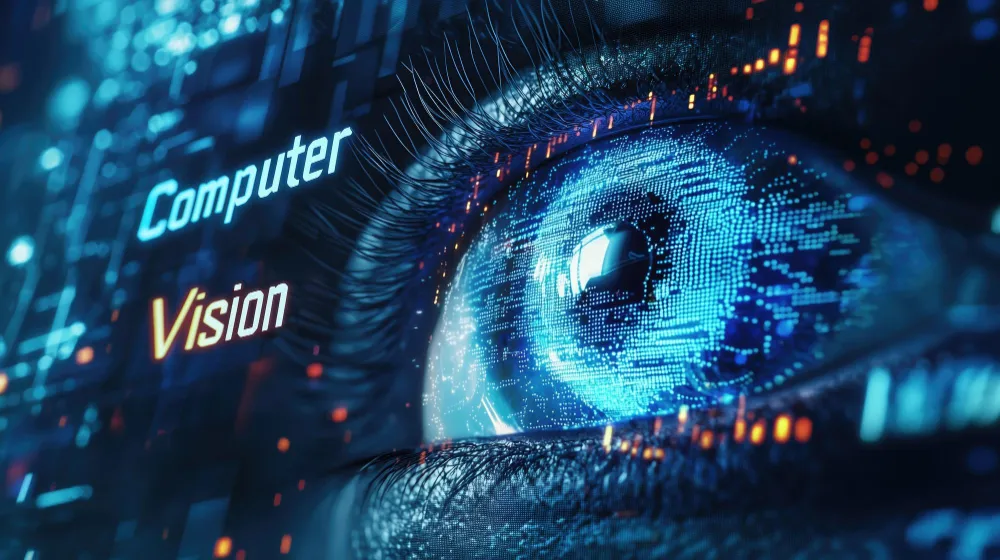
Computer vision combines image and video processing with machine learning and deep learning to interpret visual information. Common tasks include image classification, object detection, segmentation, pose estimation and visual tracking.







A computer vision model is only one part of a production vision system. Cameras, image acquisition, preprocessing, model inference, post-processing, business rules and application integration all contribute to the final result.
Different vision tasks solve different problems. Classification determines what an image contains, object detection identifies objects and their locations, while segmentation provides more detailed pixel-level information about regions or objects.
Web30 India builds computer vision systems around the complete workflow, from visual data collection and model development to real-time inference and integration with business applications.
Build models that classify images into predefined categories based on their visual characteristics.
Identify objects within images or video and determine their locations using bounding boxes and confidence scores.
Create pixel-level masks to distinguish objects, regions or visual elements within an image. Modern computer vision platforms support tasks such as instance segmentation.
Extract text from scanned documents, images, forms, labels and other visual sources.
Analyze video streams to detect objects, events, movement and patterns across individual frames and sequences.
Track detected objects across video frames to understand movement, trajectories and interactions.
Identify defects, inconsistencies, missing components and other visual conditions in controlled inspection environments.
Deploy trained models through APIs, edge devices, cloud infrastructure or integrated production systems.
Analyze camera feeds to detect objects, activities, events and predefined visual conditions.
Use computer vision to identify visible defects, inconsistencies and production-quality issues.
Extract information from documents, forms, invoices, IDs, labels and other image-based content.
Build applications for product recognition, shelf analysis, visual search, store analytics and inventory visibility.
Support production inspection, component detection, assembly verification and visual quality control.
Develop controlled vision applications for medical images, document processing and healthcare workflows where appropriate validation and safeguards are required.
Build vision systems that detect predefined events, objects or conditions across monitored environments.
Allow users and applications to search, compare and identify visual content using image-based similarity and recognition.
A production computer vision architecture connects visual data capture, preprocessing, model inference and application logic. The exact architecture depends on whether processing happens in the cloud, on local infrastructure or at the edge.
Computer vision development starts with understanding what the system needs to recognize, locate, segment or extract. Model architecture, training data and deployment environment are selected around that requirement.
Determine the category or categories represented within an image.
Locate and classify individual objects within an image or video frame.
Identify individual objects and generate masks that represent their regions within an image.
Classify pixels into predefined visual categories to understand the structure of a scene.
Identify and extract text contained within images and scanned documents.
Identify body, hand or other visual landmarks for applications that require spatial understanding. MediaPipe provides examples covering pose, hand landmarks and related vision tasks.
Combine detection, tracking and temporal analysis to interpret information across video sequences.
Computer vision performance depends heavily on the quality and diversity of training data. Images may need labeling for categories, bounding boxes or segmentation masks depending on the task.

Gather representative images and video from the environments where the system will operate.

Label images with categories, bounding boxes, segmentation masks or other task-specific annotations.

Clean, resize, transform and organize datasets for training and validation.

Train candidate models using appropriate architectures, datasets and training configurations.

Evaluate predictions against defined metrics and test data before production deployment.

Optimize models for accuracy, latency, memory usage and target hardware.
Add representative production examples and retrain models when visual conditions or requirements change.
Control storage, access and transmission of visual information.
Restrict access to cameras, datasets, models, prediction APIs and administrative systems.
Protect trained models, model artifacts, inference endpoints and deployment environments.
Define which images, video streams and visual information can be processed by the system.
Validate predictions before they trigger business workflows, alerts or automated actions.
Track model versions, inference activity, system events and relevant access activity.
Connect IP cameras, CCTV systems, industrial cameras, mobile cameras and video streams.
Integrate computer vision outputs with ERP, CRM, warehouse, manufacturing and operational systems.
Connect vision models with sensors, edge gateways and connected devices for local processing and automated responses.
Store images, video, metadata, predictions and annotations in suitable databases and object storage systems.
Send visual insights into dashboards, reporting systems and operational analytics platforms.
Expose vision predictions through APIs and connect detected events to downstream business workflows.
Detect product defects, verify assembly, inspect components and support automated quality control.
Analyze products, shelves and store environments to support inventory, merchandising and customer experiences.
Process medical images and visual documents to support controlled healthcare workflows.
Identify packages, track movement, verify shipments and support warehouse automation.
Support vehicle inspection, component detection, driver-assistance systems and manufacturing quality processes.
Analyze crops, plants, fields and visual conditions for monitoring and agricultural intelligence.
Collect an image, video frame or live camera stream.
Normalize, resize, enhance and prepare the visual input for model inference.
Run the appropriate classification, detection, segmentation, OCR or other vision model.
Analyze detected objects, regions, text, movement or other model outputs.
Apply confidence thresholds, validation logic and application-specific rules.
Send the result to an application, dashboard, alert system, workflow or automated process.

Define what needs to be detected, classified, extracted or monitored and where the system will operate.
Review available images, video sources, camera configuration, data quality and environmental conditions.
Select appropriate model families, processing architecture and deployment environment.
Build datasets, annotation workflows, training pipelines and candidate models.
Test model accuracy, false positives, false negatives, latency and behavior across representative conditions.
Connect model outputs with APIs, dashboards, enterprise applications, IoT systems and workflows.
Deploy the vision system to cloud, on-premise or edge infrastructure based on operational requirements.
Monitor inference performance, visual conditions, model behavior and system health, then improve the model as requirements evolve.


Explore practical insights on computer vision architecture, object detection, image classification, segmentation, OCR, video analytics, visual inspection, edge AI, model optimization and production vision systems.
Everyone has very little or no knowledge about the Metaverse. What does it mean and how does it work? We might not...
Today, smart contracts are beneficial for companies. This in-depth guide goes into great detail about their unique...
Everyone must be aware of how important it is to have a website in order to make a mark in the IT business industry...
Welcome to the next gaming frontier, where virtual worlds collide with reality to create immersive experiences like...
DeFi is an innovative system that will fundamentally change global finance. In summary, DeFi is an open monetary sy...
Everyone has very little or no knowledge about the Metaverse. What does it mean and how does it work? We might not...
Today, smart contracts are beneficial for companies. This in-depth guide goes into great detail about their unique...
Everyone must be aware of how important it is to have a website in order to make a mark in the IT business industry...
Welcome to the next gaming frontier, where virtual worlds collide with reality to create immersive experiences like...
DeFi is an innovative system that will fundamentally change global finance. In summary, DeFi is an open monetary sy...
Everything you need to know about our enterprise blockchain engineering process, costs, security, and architectures.
Where connections are brewed, ideas percolate, and inspiration flows!
Let’s hear about your project. Drop us the details or send us a direct email
 24/7 Support